
A practical guidebook to file your ITR accurately
It's that time of the year, again.

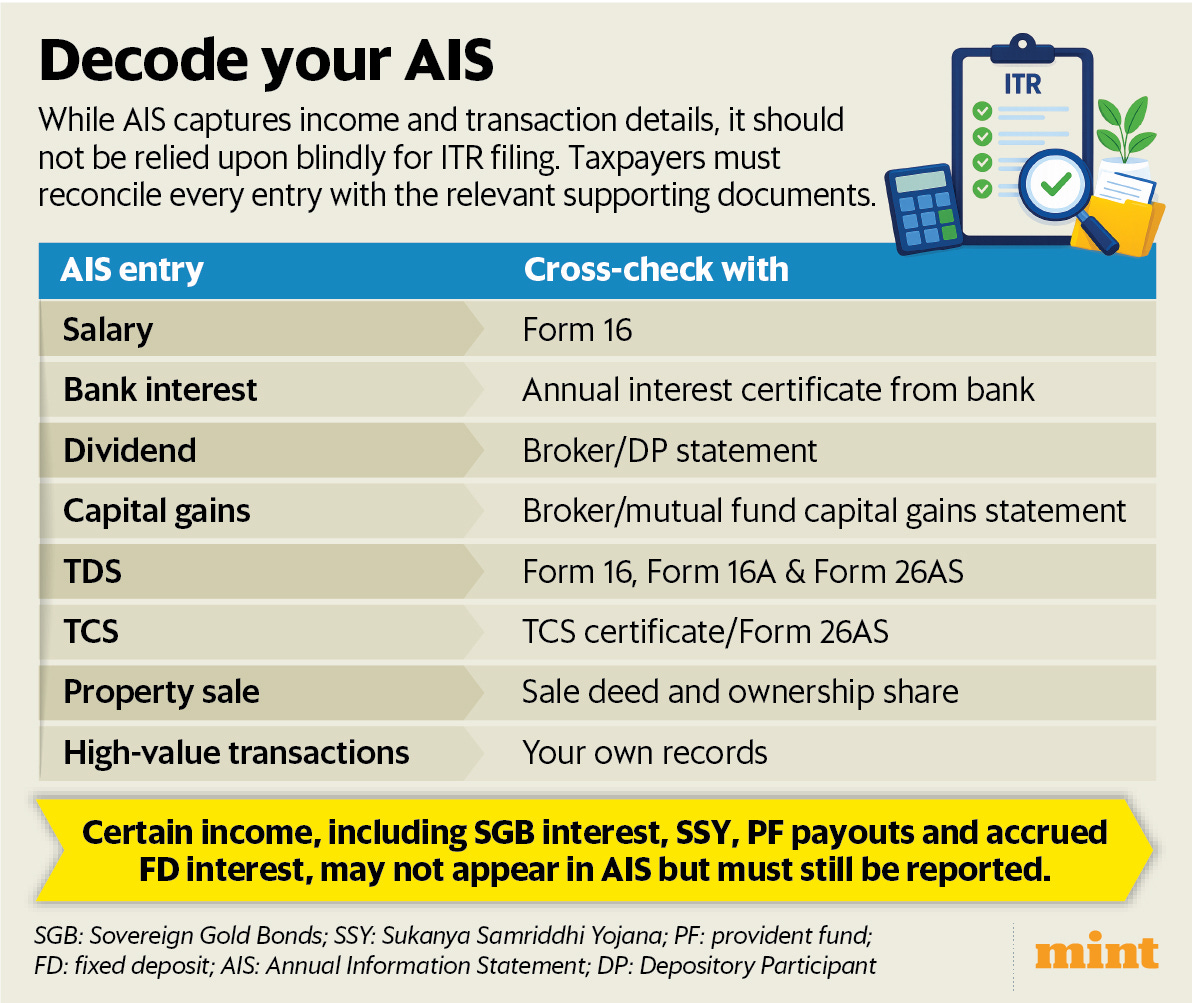
It’s that time of the year when you sit down with your financial documents to file your income tax returns. Tax filing has certainly become much simpler, especially if you don’t have multiple sources of income. Much of your financial footprint is now available in one place: the Annual Information Statement (AIS).
This document captures income and financial transactions reported by employers, banks, brokers, mutual funds and other institutions. It consolidates information from Form 26AS, TDS certificates, Form 16A and other reported transactions, making it a useful starting point once you have identified the correct income tax return (ITR) form.
But, experts caution against relying solely on the AIS. The statement is not error-free and may not capture every source of income. In this year’s tax special put together by Shipra Singh explains why taxpayers should treat the AIS as a reference document rather than the final word, and highlights the information that could be missed if you file your return based only on the AIS.
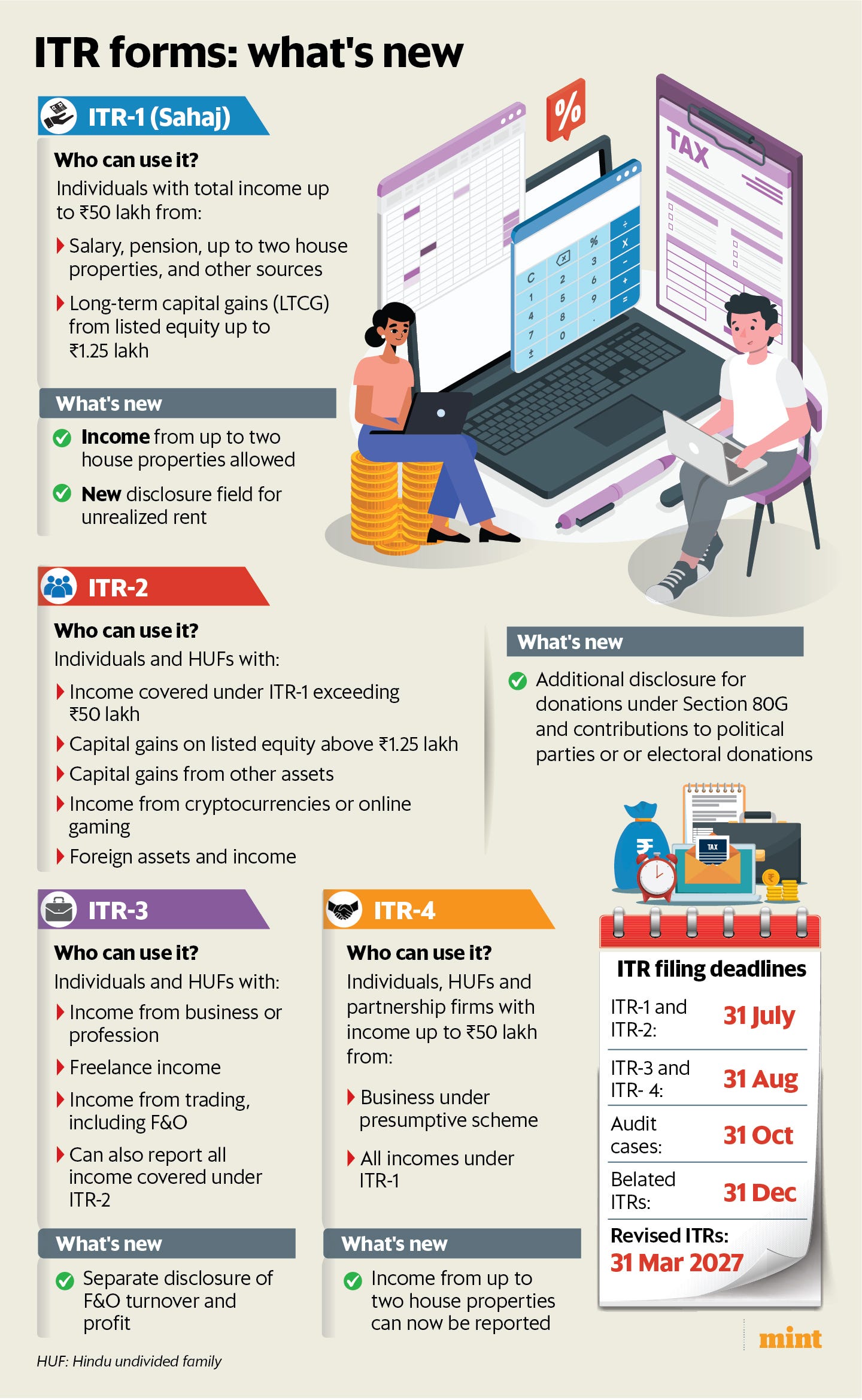
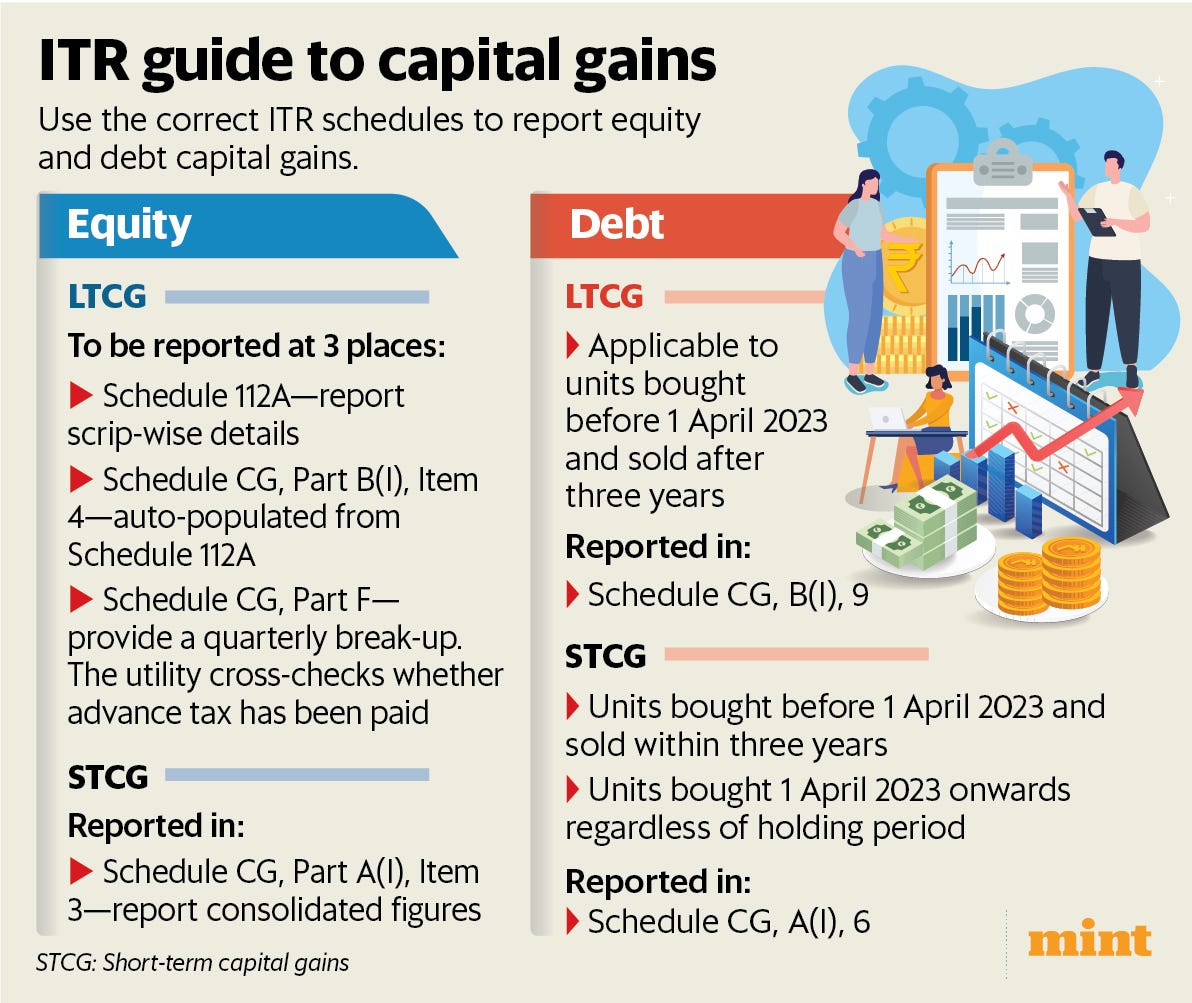
The special also helps you identify the correct ITR form. The form you need to file depends primarily on the nature of your income, your total income, capital gains, and whether you have business or professional income. Reporting capital gains from shares, mutual funds and other investments has also become more detailed following a series of tax changes over the past two years. Our guide explains which form to use, how these gains are taxed and what you need to disclose when filing your return.
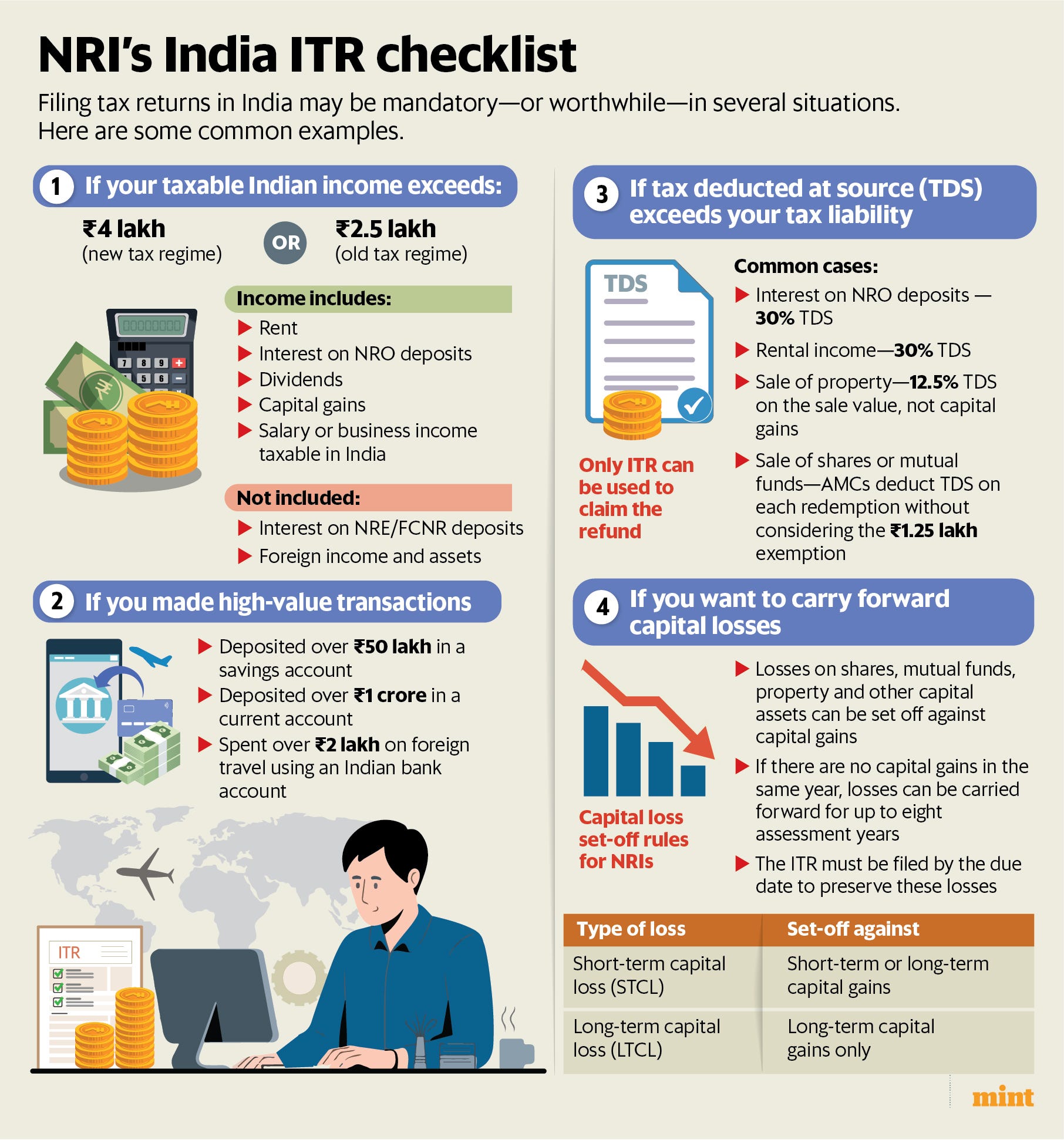
Being a tax filing season, we also included a guide for non-resident Indians who continue to earn income in India through rent, investments or other sources. While NRIs are required to file an ITR if their taxable Indian income exceeds the prescribed threshold, voluntary filing can help as it allows them to claim TDS refunds, carry forward eligible losses, maintain tax compliance and simplify future financial transactions in India.
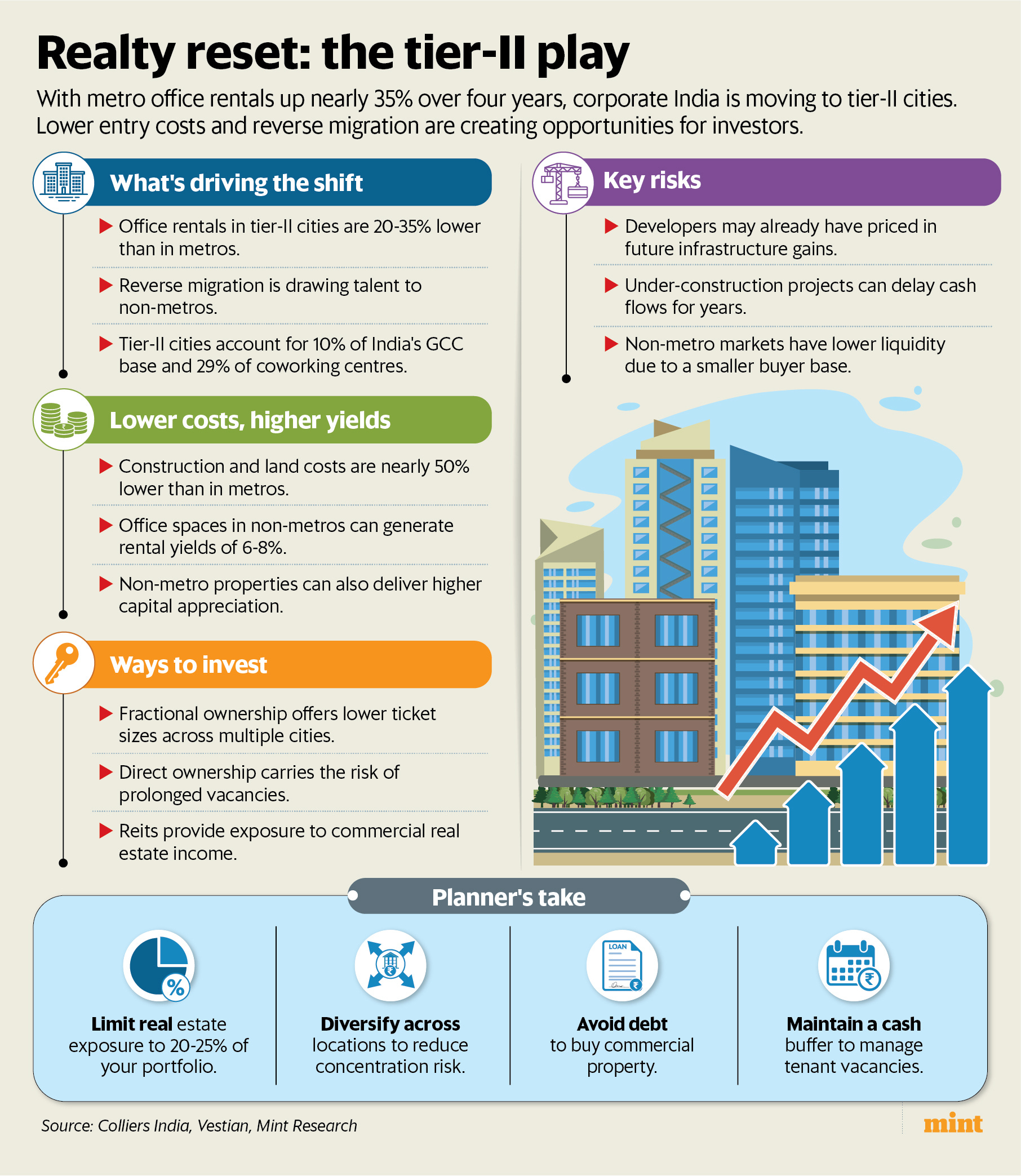
The second story in Mint Money this week looks at the rising interest in commercial real estate away from the packed and expensive metros, towards smaller cities. Driving this trend are reverse migration and a growing multinational footprint, which create commercial real-estate opportunities for investors through lower entry costs, better rental yields and stronger capital appreciation. But this may not always play out the same way—execution delays, vacant properties and liquidity risks remain. Ann Jacob looks at how commercial real estate is shaping up in the non-metros, the risk-reward tradeoffs investors need to keep in mind, and some handy tips from financial planners to help eager investors navigate their decisions.
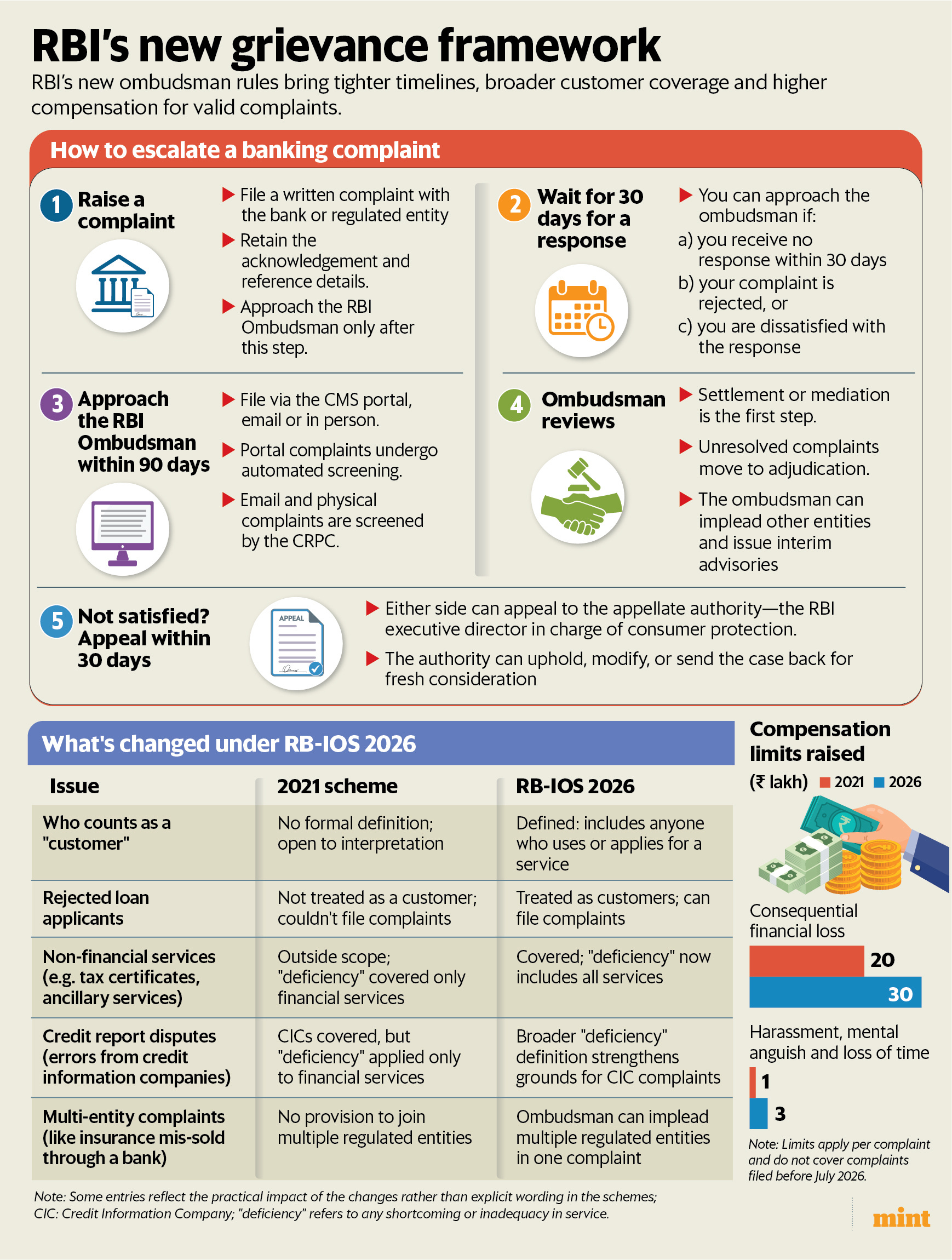
Ananya Grover this week looked at the new Reserve Bank–Integrated Ombudsman Scheme (RB-IOS 2026), effective from this month, to examine key changes in how customer complaints will be handled by the banking ombudsman.
First, and an important one at that: the new scheme has cast the net wider for aggrieved customers, as the definitions of “customer” and “deficiency in service” now include third-party products and ancillary services provided by the bank. “Customer” is now anyone who uses, or applies for, a service from a regulated entity, such as banks, NBFCs, and payment system participants, while “deficiency in service” has been extended to cover all services, not just financial ones. The scheme also gives the ombudsman the power to bring other regulated entities into a complaint if they fail to comply with RBI guidelines and issue interim, non-binding advisories to such entities.
Second, the quantum of compensation for aggrieved customers has increased. Third, the window to file a complaint has shortened from a year to 90 days, or roughly three months. Read the story for details.
And finally this week, an important story by Aprajita Sharma, who examined retention data from life insurance companies to echo the same concern raised in the Reserve Bank of India’s Financial Stability Report of high surrenders of life insurance policies. Customers continue to abandon their life insurance policies, with nearly one in two lapsing their policy within five years.
The RBI’s Financial Stability Report 2026 revealed that surrender and withdrawal payouts by life insurers exceeded maturity payouts, accounting for 38.3% of total payouts in FY26, compared with 36.9% for maturity benefits. The central bank warned that persistently high surrender rates could point to policyholder dissatisfaction, product mis-selling, or growing competition from alternative investment products. While for the customers of life insurance products, this means that they need to be on high alert when buying an insurance plan masking as an investment product, such high rates of surrenders doesn’t bode well for insurers either. While policy surrenders once boosted insurers’ profitability, regulatory changes have made them significantly less favourable for the insurers. Further, commissions payouts only seem to have increased. As a result, insurers are now shouldering both higher commissions to acquire customers and larger surrender payouts when policies are discontinued early.

In this week’s Money Guru, Ann Jacob spoke with Sailesh Raj Bhan, chief investment officer (equities) at Nippon Life AMC, about why the recent correction in market valuations presents an attractive entry opportunity for long-term investors. He also explained how global trends, including the AI-driven rally, inadvertently created value opportunities in Indian banking stocks, and why maintaining discipline around valuations remains the most reliable way to navigate market cycles.
That’s all from the Mint Money team this week. Until next time!
Deepti Bhaskaran is editor, Mint Money, with two decades of experience as a personal finance journalist. Her work reflects a strong focus on financial literacy, consumer protection and practical money management. She can found at deepti.bhaskaran@livemint.com.