
When behaviour becomes your biggest risk
F&O trading has caught the fancy of army officers. That isn't necessarily a good thing.

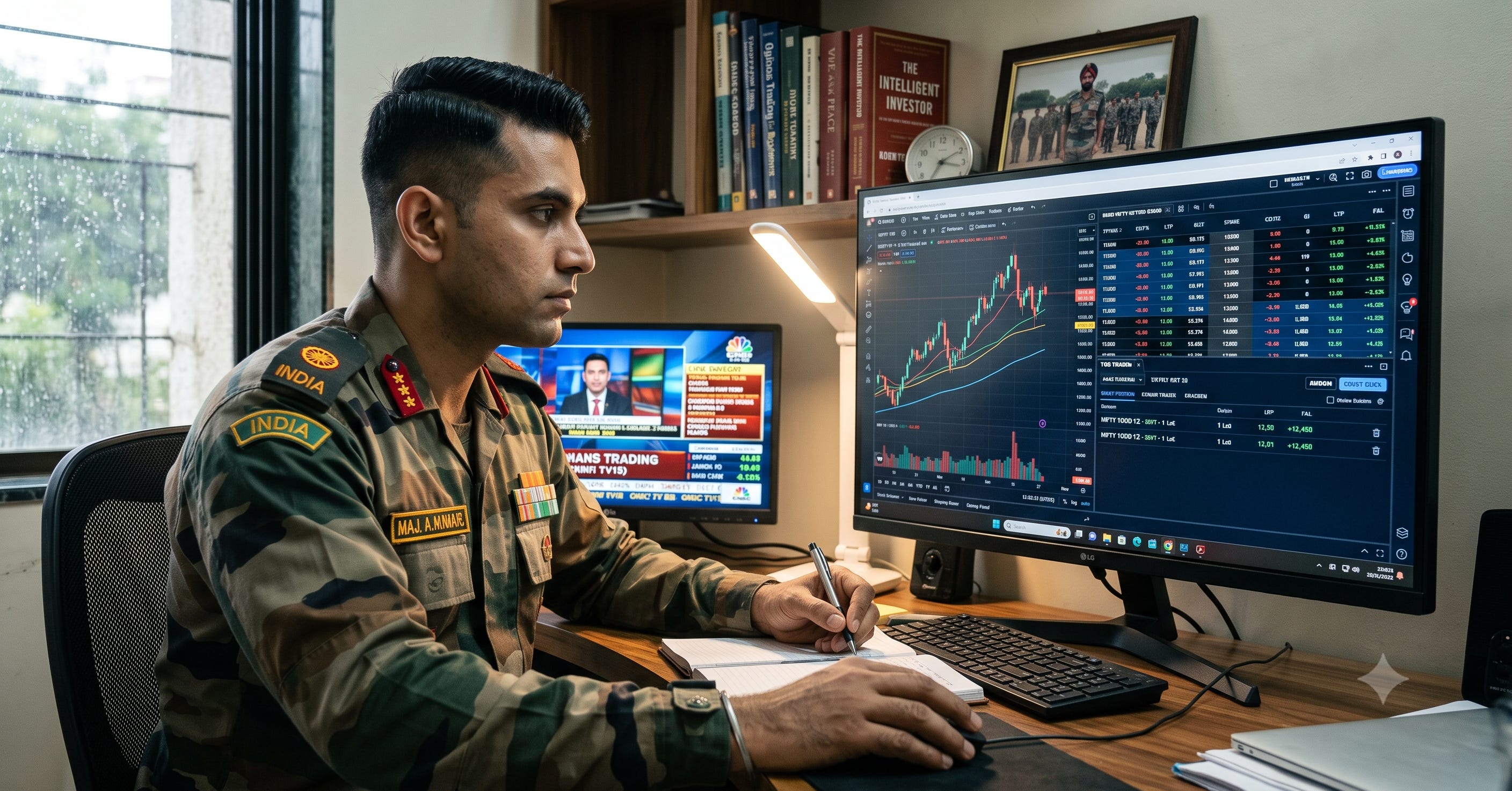
Recently, a friend in the armed forces told me that he was considering premature retirement. That’s not unusual. Many people leave the forces after completing pensionable service to secure a guaranteed pension for life and seek better opportunities in the private sector. What shocked me, however, was his reason. He wanted to retire so he could devote more time to trading.
What followed was a long conversation in which I tried, rather unsuccessfully, to dissuade him, while he, equally unsuccessfully, tried to convince me that he knew what he was doing. We both walked away unconvinced, but the conversation left me wondering: where was this confidence coming from? And he wasn’t a one-off. As I explored this newfound addiction among friends and family in the forces, I found that an increasing number of people were hooked on derivatives trading. The financial advisors working with serving and retired defence personnel confirmed the trend that a growing number of serving personnel are trying their hand at F&O trading.
Backed by easy access to loans from their banks, a guaranteed monthly pay cheque, a pension waiting at the end of service and the constant stream of spectacular trading wins splashed across social media, many are taking risks that would have seemed unthinkable a few years ago. And the consequences are dire. According to a financial advisor’s account, one serving officer accumulated nearly ₹6.5 crore in trading losses over four years.
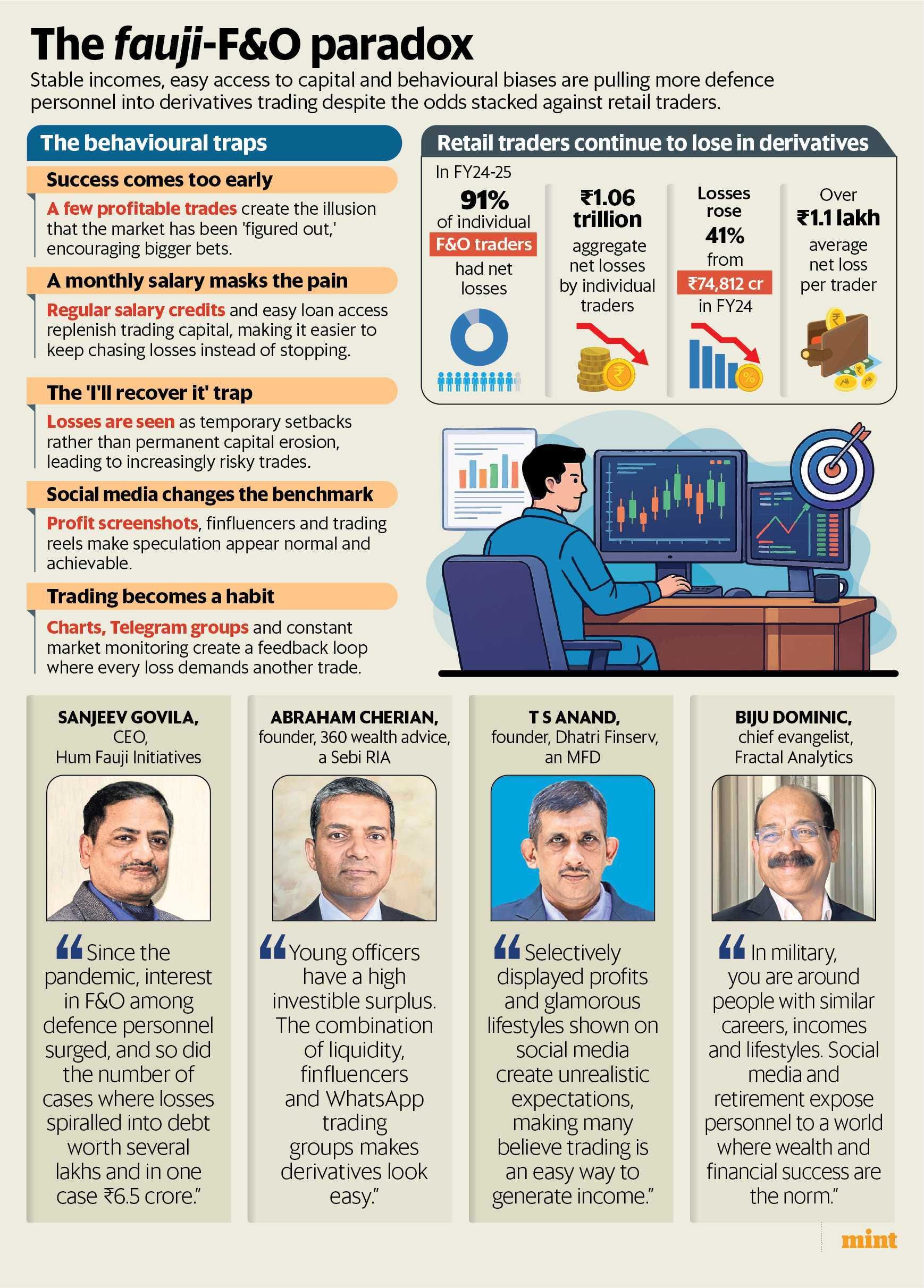
The bigger story, however, isn’t the losses because this has been documented well by the markets regulator. It’s the behaviour behind them. A guaranteed income and future pension create a financial safety net that can make outsized risks feel acceptable. The downside appears manageable, while the upside looks limitless. Layer this with FOMO, overconfidence and the illusion created by social media that successful traders are everywhere and the line between investing and gambling almost disappears. Of course, this isn’t unique to the armed forces. But the combination of financial security, easy credit and constant exposure to stories of quick riches can amplify these behavioural biases. A fantastic and important story by Shipra Singh explores this psychology behind risk-taking, and why it is leading some serving personnel down a dangerous path.
This week, Ananya Grover explored how loan approvals are undergoing a paradigm shift, driven by the account aggregator (AA) framework and artificial intelligence.
The RBI’s AA framework allows customers to securely share their financial data with lenders, giving AI-based underwriting access to a much broader dataset on a borrower’s income, spending patterns, liabilities and cash flows. The result is faster loan approvals and, in some cases, better pricing and higher credit limits. While this is good news for borrowers in terms of speed and efficiency, concerns around transparency remain. Today, despite consenting to share a broader set of financial information, borrowers have little visibility into how lenders process that data once received.
To address this, the RBI has proposed draft AI-lending guidelines that require greater transparency around automated lending decisions. At the same time, Sahamati, an RBI-recognised self-regulatory organisation for India’s account-aggregator ecosystem, has proposed a framework that would allow borrowers to track how their shared data is processed. Every action performed on a borrower’s data would generate a processing receipt, allowing the borrower to know, for instance, when a lender has used the information to assess income or evaluate creditworthiness.
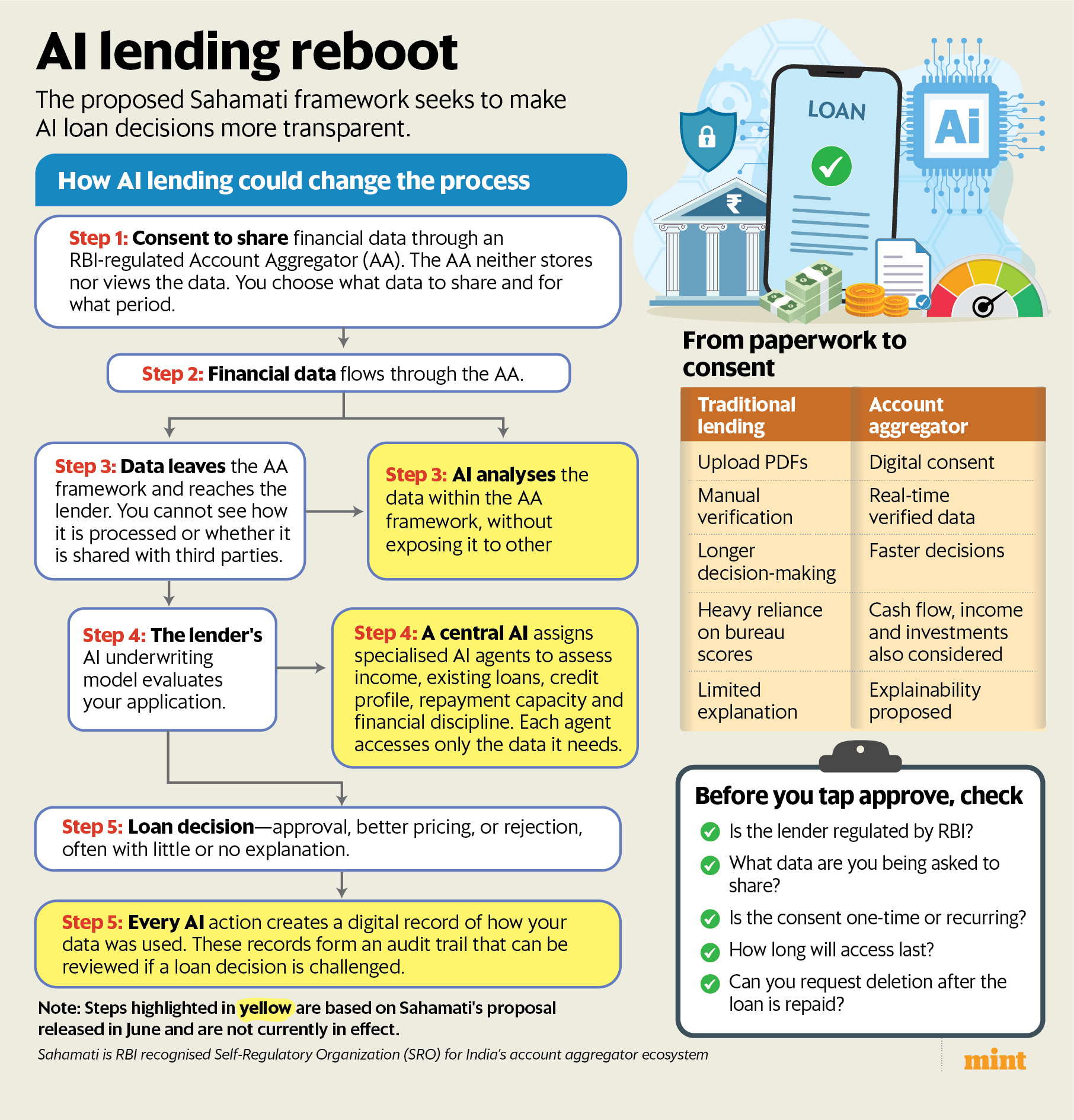
Both initiatives also seek to address the problem of opaque loan rejections, and until these safeguards are implemented, borrowers should carefully review the scope and duration of their consent, share data only with RBI-regulated lenders and request deletion of their data once it is no longer required.
Ann Jacob, this week, looked at the silent but steadily rising cost of entrance exam coaching. Education inflation in India is around 10-12%, meaning the cost of education nearly doubles every six to seven years. That’s why factoring coaching expenses into a financial plan is not just smart but prudent.
Consider this: Coaching for competitive exams such as JEE and NEET can cost anywhere between ₹3.5 lakh and ₹4.5 lakh. If these expenses aren’t planned for in advance, families may be forced to dip into retirement savings, liquidate long-term investments or even borrow to fund them.

Experts caution against treating coaching costs as unforeseen emergencies and instead recommend planning for them as a separate financial goal. The story also highlights how herd mentality and social pressure often drive such spending, making financial planning just as important as academic planning.
In the investment space, Aprajita Sharma spoke to Nimesh Chandan, chief investment officer at Bajaj Asset Management, whose guiding investment philosophy is to invest only in businesses or asset classes he understands well. What also sets him apart is that despite all the recent noise around global investing, Chandan has no international exposure. With a strong home bias, over 80% of his portfolio is invested in equities, while about 7% is allocated to gold to cushion the portfolio during uncertain times.
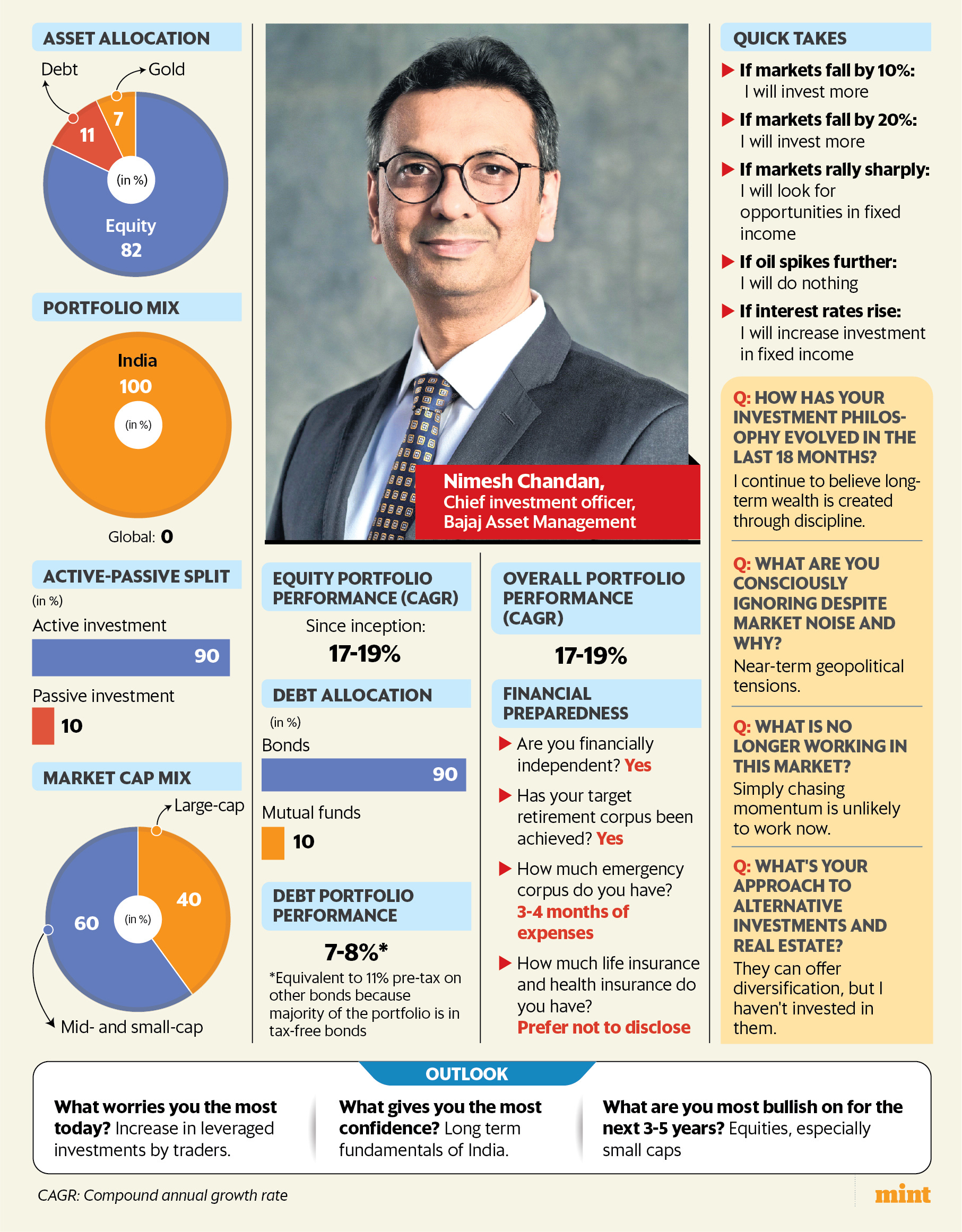
Chandan has also steered clear of alternative investments and real estate, preferring assets that are easier to understand, track and manage. His biggest investing lesson is to be greedy when others are fearful, an approach that has helped him generate portfolio returns of 17-19%.
And finally, Shoaib Zaman and Jash Kriplani looked at the growing share of passive funds in India. While passive funds are nowhere near the US, where they account for nearly 55% of assets under management, they are growing rapidly in India and now make up about 16% of industry AUM. It’s true that much of this growth is driven by institutional and corporate money, but retail investors too are looking at passive funds seriously. The reason, experts argue, is that generating alpha is becoming increasingly difficult in efficient market segments like large caps and now even midcaps.
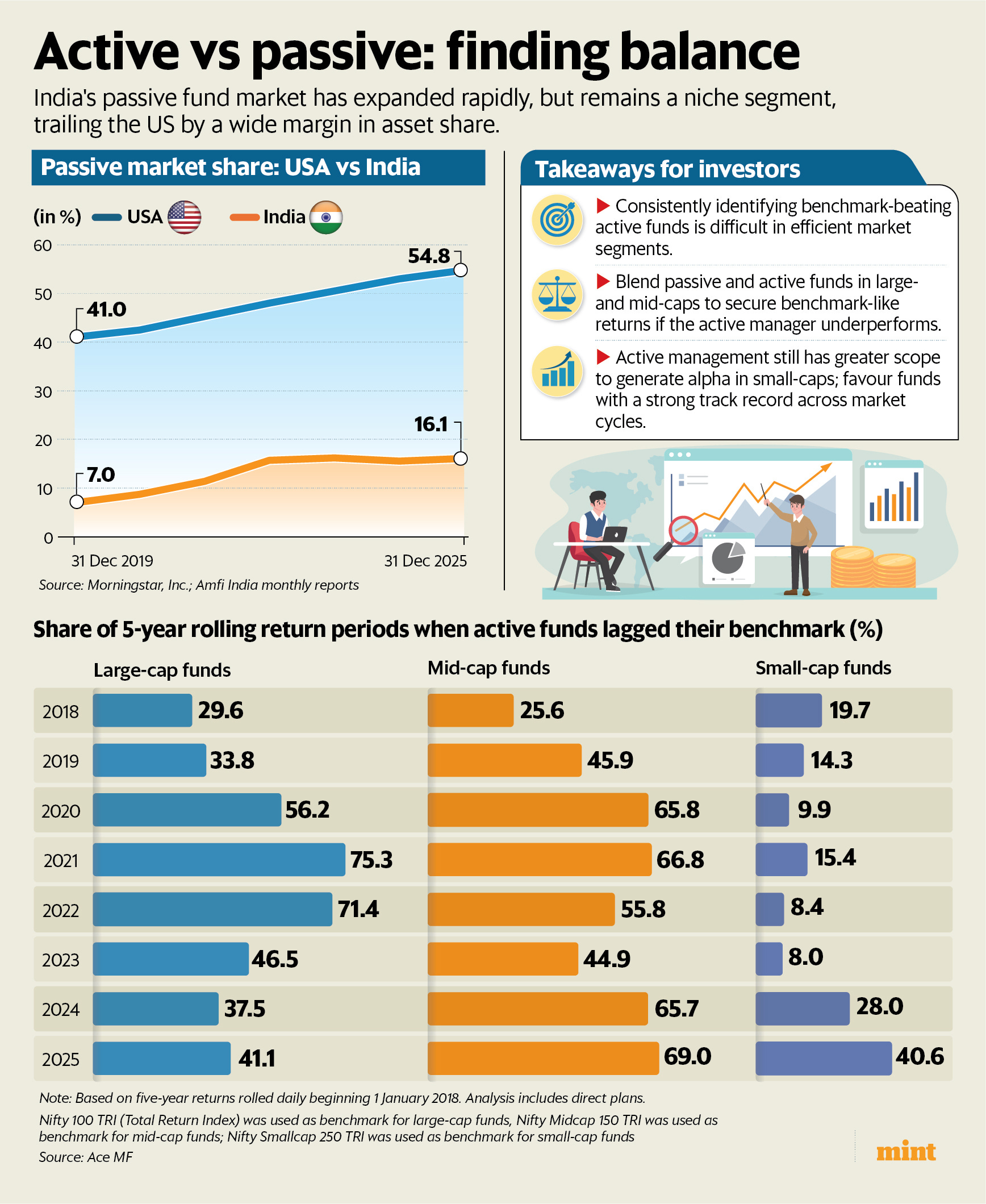
This is not a case for ditching active funds altogether, but for using a mix of active and passive strategies to secure benchmark returns even if fund managers underperform. Small-cap funds, however, still offer greater scope for alpha because of their wider investment universe and lower market efficiency. Just make sure to pick funds with a proven track record across different market cycles.
That’s all from the Mint Money team this week. Until next time!
Deepti Bhaskaran is editor, Mint Money, with two decades of experience as a personal finance journalist. Her work reflects a strong focus on financial literacy, consumer protection and practical money management. She can found at deepti.bhaskaran@livemint.com.